Branding for Aesthetic Clinics and Medspas: What Makes Patients Trust a Brand
Nobody picks a clinic because of what's on the treatment menu. Every medspa within five miles offers the same peels, the same fillers, the same laser. What actually gets someone through the door is trust, and that trust is built way before they ever book a consultation.
Think about how patients actually shop for this stuff. They don't walk past a clinic and book on the spot. They google it. They scroll the Instagram. They zoom in on before-and-afters, read a few reviews, maybe stalk the founder's profile for a minute. By the time they call to book, they've already decided whether they trust you. The consultation just confirms it.
We see this constantly with our own clients. The clinics that are fully booked out aren't necessarily the ones with the best equipment. They're the ones that look like they know exactly what they're doing, before a single patient has spoken to anyone on staff.

Here's the balance every aesthetic brand has to get right: clinical enough that people trust you with their face, warm enough that they don't feel like a number. Too far one way and you look cold, like a lab report. Too far the other and people start wondering if you're actually qualified to be near a needle.
Most clinics get this wrong in one of two directions. Some go full spa: candles, script fonts, a colour palette that's 90% blush pink. Nice, but forgettable, because it looks exactly like the medspa two doors down, and the one after that. Others overcorrect and end up looking like a hospital leaflet. Clinical, sure. But nobody's excited to book in with a hospital leaflet, and a bit of excitement is half of what gets someone to actually go through with a treatment.
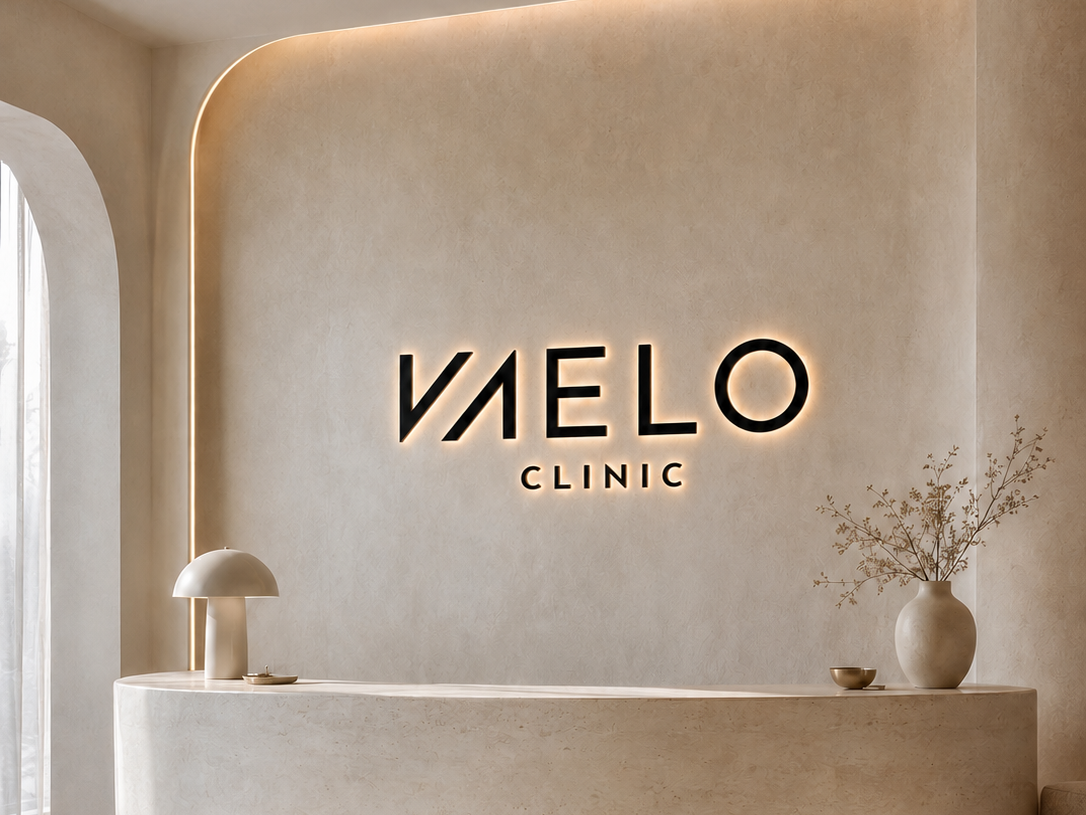
Then there's the quieter problem: inconsistency. A gorgeous Instagram grid, a website from 2016, and a waiting room that matches neither. Patients clock this even if they couldn't tell you why something feels off. And it doesn't stop at the screen. If the brand promises "calm, considered, premium" online and the actual clinic feels like a dentist's waiting room with mismatched chairs, that promise breaks the second someone walks in. The physical space has to carry the same brand as the website. Most clinics never think about that until it's already working against them.

The clinics that win pick a lane and stay in it everywhere: the logo, the site, the front desk, the reception playlist, even the follow-up text after a treatment. That consistency does more for trust than any single design choice. It tells a patient, without saying it outright, that if you're this considered about your brand, you're probably just as considered with their skin.
That's the actual job. Not a nicer logo. A brand someone believes in before they've asked a single question, and one that still holds up the moment they walk through the door.


Comments